 Slumber Standard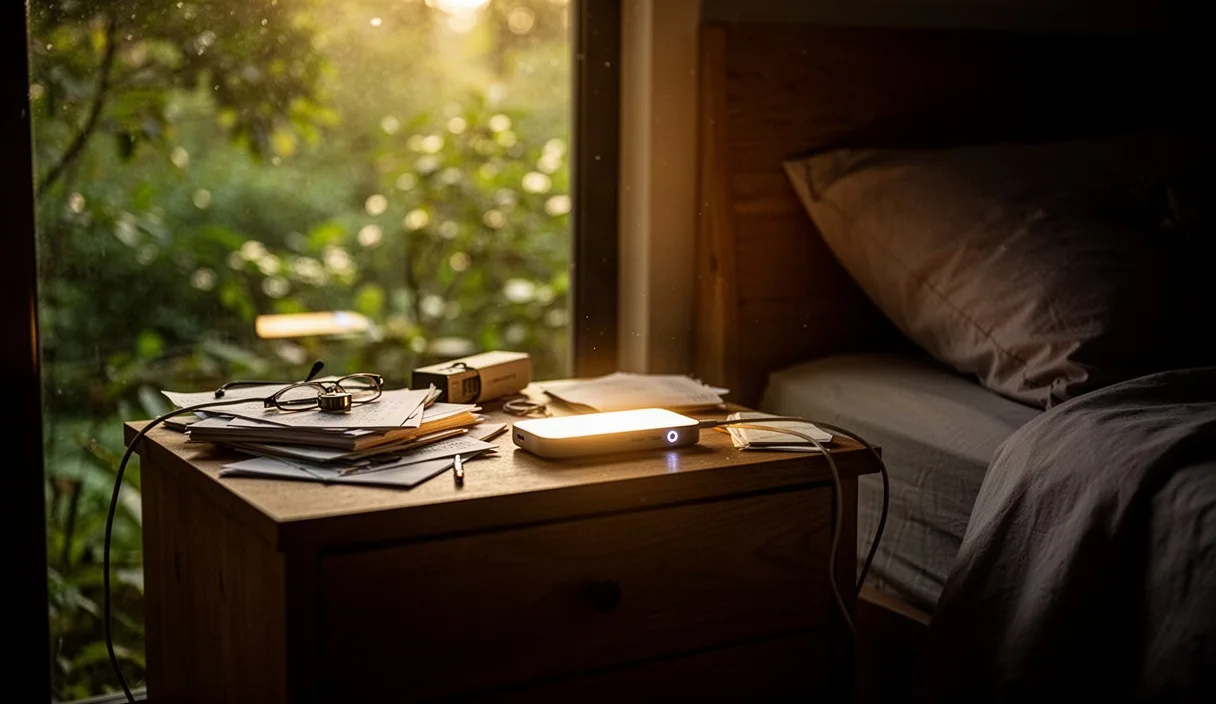
You can do everything right before bed: dim the lights, skip the caffeine, put the phone away, and still wake up tired. When that happens for more than a few nights in a row, the problem often isn't your routine. It's the room itself. Bedrooms accumulate small, easy-to-ignore issues over months or years: a streetlight that shifted angle after a tree was trimmed, a mattress that quietly passed its useful life, a vent that's been closed since winter. None of these feel urgent on any single night, but stacked together they degrade sleep quality in ways that are hard to trace back to a cause.
This checklist walks through twelve specific, checkable signs that your bedroom environment is undermining your sleep rather than supporting it. Each one includes what to look for and what to do about it. You don't need to fix all twelve tonight. Start with the ones that sound familiar, and treat this as a diagnostic pass rather than a renovation project.
Temperature Clues You're Missing
Most sleep guidance repeats the same range: roughly 60 to 67 degrees Fahrenheit (15 to 19 degrees Celsius) as a starting point for adults. But the number on your thermostat isn't the number that matters. What matters is skin temperature and airflow right where you sleep, which a wall-mounted thermostat six feet away can't measure.
Common overlooked clues include waking up between 2 and 4 a.m. specifically, kicking off blankets mid-sleep without remembering it, or one partner running hot while the other is cold under the same comforter. If you wake up sweating in the first half of the night, your room is likely too warm when you fall asleep, even if it cools down later. If you wake up cold in the second half, your heating may be cycling off before your body's natural temperature drop ends.
A cheap fix worth trying before buying anything: place a separate thermometer on your nightstand for a week and log the reading when you go to bed and when you wake up. A five-degree swing overnight is normal in many homes; a swing larger than that suggests poor insulation or a heating/cooling system that isn't matched to the room's size.
Light Sources You Haven't Noticed
Blackout curtains solve the obvious problem. They don't solve the small electronic glow from a router, a phone charger, a smoke detector, or a TV standby light. These sources rarely feel bright enough to matter, but a light meter (many phone apps offer a rough one) often reads 1 to 5 lux from a single LED indicator, and research on light exposure suggests even low levels can interfere with melatonin timing in some people.
Streetlights are a frequent, underestimated source. If a light was installed or upgraded to brighter LED fixtures in your neighborhood in the last few years, a room that used to be dark enough may not be anymore. Walk your room at night with the main lights off and let your eyes adjust for two full minutes. If you can read the time on a non-lit clock or see the outline of furniture clearly, there's more ambient light than you think.
- Cover or unplug devices with always-on LEDs, or use a small piece of electrical tape over the indicator.
- Check curtain edges and gaps at the top of the rod, where light often leaks even with "blackout" fabric.
- If you wake up in the middle of the night, avoid turning on a bright overhead light; a dim, warm-toned light near the floor limits the disruption.
Noise Issues Beyond Obvious Sounds
You've probably already ruled out the loud, obvious noises: traffic, a snoring partner, a barking dog. The signs worth checking are the intermittent ones, because the brain habituates to constant sound but reacts to sudden changes even at low volume. A refrigerator cycling on in the kitchen, a furnace igniting, a neighbor's schedule shifting, these produce noise events in the 40 to 55 decibel range that can trigger brief arousals without fully waking you.
A practical way to check this is a sound-level recording app left running overnight, or a basic sleep-tracking device with a noise log if you already own one. Look for spikes rather than average volume; a room that averages 30 decibels but spikes to 55 decibels four times a night is more disruptive than a steadily quiet room, even one at 35 decibels average.
If you can't eliminate the source, a consistent low-level sound machine or fan set at the same volume every night can mask sudden spikes more effectively than silence, because it raises the threshold a sound needs to cross to register as a change.
Air Quality and Ventilation Checks
Bedrooms are often the least ventilated room in a house because doors stay closed for hours at a stretch. Carbon dioxide can build up in a closed room with two people sleeping in it, and while home CO2 monitors aren't as common as smoke detectors, inexpensive ones (often under $50) exist specifically for tracking bedroom air quality overnight. Readings that climb well above the outdoor baseline of around 400 parts per million, into the 1,000 to 1,500 range or higher by morning, point to a room that's too sealed for its occupancy.
Signs you can notice without a monitor: waking up with a mild headache, a dry mouth, or a sense of grogginess that doesn't match how long you slept. These aren't diagnostic on their own, and if they're frequent or severe, they're worth mentioning to a doctor rather than assuming it's purely a ventilation issue. But cracking a window an inch or running a bedroom door fan for airflow is a low-cost first test.
Dust and allergens matter too. If your mattress or pillows are more than a few years old without a cover, or if you haven't changed an HVAC filter in over three months, allergic reactions can disrupt sleep through congestion and throat irritation without ever registering as a distinct "allergy" complaint in your mind.
Clutter and Its Effect on Wind-Down
Visual clutter doesn't make noise or change the temperature, so it's easy to dismiss as a non-factor. But a room that visually signals unfinished tasks, laundry piles, a desk crammed into the corner, papers on the nightstand, keeps some part of attention lightly engaged at exactly the time you're trying to disengage. This isn't the same as sleep hygiene in a strict clinical sense; it's closer to environmental psychology, and the effect size varies a lot by person.
A useful self-check: stand in your doorway and look at the room as if you were a guest seeing it for the first time. Count the number of distinct "unfinished task" objects in view, a laptop, a stack of mail, workout clothes on a chair. More than three or four is a reasonable sign that the room reads as a workspace or storage area rather than a place built for rest.
This matters more if you already struggle with racing thoughts at bedtime. Clearing the surfaces you can see from bed, even without a full declutter, is a five-minute task that some people notice a difference from within days, though it's not a guaranteed fix and won't replace addressing the underlying source of the racing thoughts.
Bedding and Mattress Age Red Flags
Mattress lifespan depends heavily on material and usage, but most manufacturers put average replacement windows at 7 to 10 years for innerspring and hybrid models, and sometimes longer for higher-density foam. Sagging in the middle third of the mattress, visible when you strip the sheets and look along the length of it, is one of the clearest physical signs that support has degraded even if the mattress still feels acceptable when you lie down.
Pillows have a shorter functional life than most people assume, generally 1 to 2 years for standard fill, because they lose loft and stop returning to shape after being compressed nightly. A quick test: fold the pillow in half; if it doesn't spring back to roughly its original shape within a few seconds, it's likely past useful support.
| Item | Typical Lifespan | Sign It's Time to Replace |
|---|---|---|
| Mattress (hybrid/innerspring) | 7 to 10 years | Visible sagging, new aches on waking |
| Pillow | 1 to 2 years | Doesn't spring back after folding |
| Mattress protector | 2 to 3 years | Visible staining or torn seams |
| Sheets (regular use) | 1 to 2 years | Thinning fabric, pilling, reduced softness |
Sheets and mattress protectors are the easiest of these to overlook, since fabric wear is gradual. If you can't remember when you last bought sheets, that alone is a fair signal it's been longer than a year or two.
Common Mistakes
People chasing bedroom problems tend to over-correct in one direction, buying blackout curtains while ignoring a device LED, or replacing a mattress while leaving a decade-old, flattened pillow in place. Another frequent mistake is testing changes all at once: swapping the mattress, the sheets, and adding a white noise machine in the same week makes it impossible to know which change actually helped.
A third mistake is relying entirely on subjective impressions of "feeling fine" in the room during the day. A bedroom can look and feel comfortable in daylight while having a light leak, noise pattern, or temperature swing that only shows up at 3 a.m., which is why several of the checks above call for either overnight logging or a nighttime walkthrough rather than a quick glance.
A Quick Room Audit You Can Run Tonight
You don't need special equipment to start. Run this sequence once, tonight, and note anything that stands out:
- Turn off all lights and let your eyes adjust for two minutes; note any visible light sources.
- Place a thermometer on your nightstand and check it before bed and immediately upon waking.
- Sit in silence for sixty seconds and list every sound you can hear, including faint ones.
- Strip the mattress and check for sagging along its length; fold your pillow and see if it springs back.
- Look around from your pillow's vantage point and count visible unfinished tasks or clutter.
If two or more of these checks flag a problem, address the cheapest and easiest fix first, tape over an LED, crack a window, or clear a nightstand, and give it about a week before making a bigger purchase like a new mattress or blackout curtains. If sleep problems persist despite a clean environment, that's a reasonable point to bring the pattern to a doctor rather than continuing to troubleshoot the room alone.